
Steel buildings in terms of lightness, ductility, connection details and TBDY 2018.
Steel stands out among earthquake-resistant building materials for its lightness and ductility. However, the safety of a steel building depends not only on the material but on the design, connection details and fabrication quality.
Why is a light, flexible structure an advantage?
The horizontal force acting on a structure in an earthquake is proportional to its mass. A steel building is much lighter than reinforced concrete of the same volume, so it carries less seismic force. Steel's ductile behaviour lets the structure dissipate energy by deforming without breaking.
The importance of connections
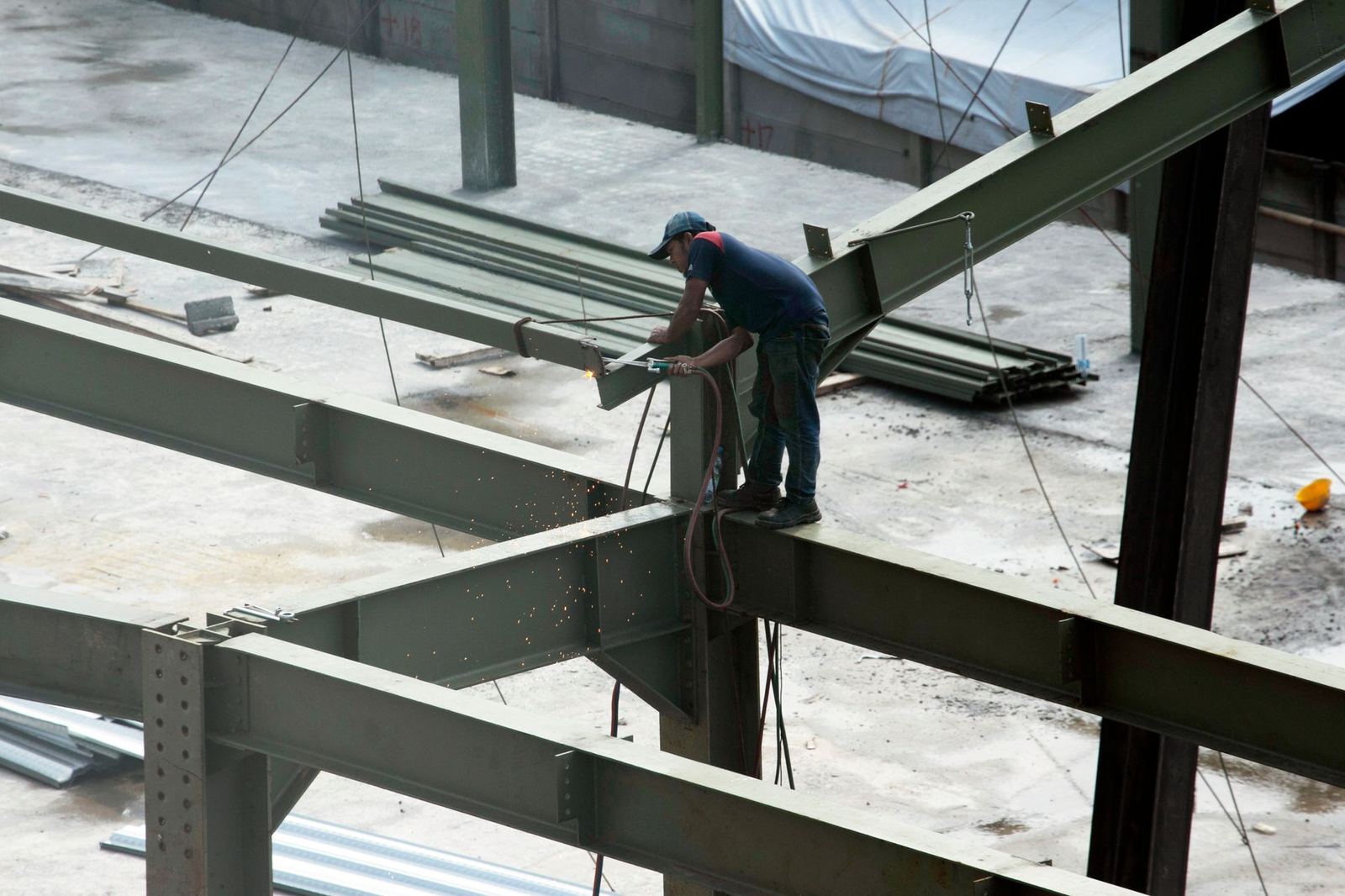
The most critical points in steel buildings are column-beam joints, anchor plates and foundation connections. Connections must be designed to transfer the forces arising in an earthquake safely and made by certified welders in fabrication. High-strength bolts are tightened by torque and recorded.
The earthquake code
The Turkish Building Earthquake Code (TBDY 2018) sets ductility level, section limits and joint conditions for the ductile design of steel buildings. The soil class and the region's seismic hazard level affect the design acceleration spectrum, so the same project is built with different sections in different regions.
Corrosion and fire
For steel to last long, hot-dip galvanising or suitable paint systems are necessary. Because steel loses strength above 500 °C in a fire, fire-resistant intumescent paint or insulation cladding is applied where required.
What is different in light steel homes
In light steel frame systems, loads are spread through many thin profiles and wall panels. Bracing and sheathing diaphragms give the structure lateral stiffness. With appropriate design, these systems perform well in earthquakes for low- and medium-rise housing.
Every building must be calculated for its own ground and loading; this article is general information and does not replace a structural design.
Repair after damage and reuse
After an earthquake, steel buildings are easier to assess than reinforced concrete because loosened connections and deformed members can be identified and repaired on site. Thanks to bolted connections, damaged members can be replaced. This feature is especially important for schools, hospitals and post-disaster buildings.
Questions to ask when choosing
- Was the structural design prepared to TBDY 2018 and by a licensed engineer?
- Will a quality control report be provided for welded and bolted connections?
- Was the foundation design made according to the ground survey?
- What class are the fire and corrosion protection?